Rising Sun R

Rising Sun R

The sequel to Rising Sun. The series continues to follow Ikki Kai in the Japanese Self Defense Force as he enters training for Ranger courses.

Since I enjoyed Rising Sun I was looking forward to checking out this sequel. Unfortunately this manga seems to be copying the original series focus on Ikki training. The only change is that he’s no longer a fresh new recruit but a now a new recruit for the Rangers.

The original Rising Sun covered some interesting aspects from the training of these Japanese soldiers, specifically the unique manner their shooting training was handled. Since creator Satoshi Fujiwara himself went through the JSDF boot camp, there was a nice bit of realism to the training. I’m unsure if Fujiwara did Ranger training but I didn’t get the same feeling here. That and the story centered around Ikki training again, I wasn’t as engaged with this book. I’ll pass on continuing to read it.

~dakazu

BL Metamorphosis

BL Metamorphosis

A manga about a friendship between a high school girl and a seventy-year-old woman over their appreciation of Boys Love manga.

We’ve discussed this on a recent episode.

I can’t tell you how refreshing it is to see a wholesome and appropriate relationship between an adult and teenager in a manga. Since so many of these end in an inappropriate romantic relationship I loved seeing Kaori Tsurutani setup a genuine friendship between Urara and Ichinoi. And while Urara’s section of the narrative is a common story about a teen ashamed of her interests, it’s really unique to read about a fully realized senior citizen.

I highly recommend this. Available in English from Seven Seas Entertainment.

~dakazu

Onnanoko no tame no Strip Gekijou Nyumon

Onnanoko no tame no Strip Gekijou Nyumon

Manga artist Korin Nao‘s introductory guide manga to Japanese strip theaters for female patrons like herself.

This manga is fantastic. Not only is does Korin Nao recount her own experiences getting into strip theaters, she also meticulously explains the proper manners and etiquette patrons need to follow. Nao interviews longtime patrons, lighting technicians, and the dancers themselves. And everything is drawn in an adorable cute style by Nao. Her more simplistic art style is perfect for drawing the naked dancers without being graphic.

You learn how different Japanese strip theaters are compared to American strip clubs from reading this book. Strip theaters in Japan are much closer to a cabaret style performance that ends with poses of full frontal nudity. There’s also much more audience participation with some patrons accompanying the dancers by playing tambourine or throwing ribbons when the dancer strikes a pose. It’s all really interesting to read about.

I also loved how Nao gained an appreciation for the beauty of different body types from seeing many different dancers at different strip theaters. It’s great to see how manga like this can cover a more adult topic without focusing on simple titillation.

~dakazu

Bimyou ni Yasashii Ijimekko

Bimyou ni Yasashii Ijimekko

A comedy manga about a bully who is subtly kind.

I like this manga! On the surface bully Kizaki looks like he’s punishing his victim Tamura but it’s never truly punishing. Kizaki will make Tamura go buy him something but he gives Tamura extra money so he’ll have enough and sets the time limit at a reasonable pace. When Kizaki is grumpy and calls out Tamura after school it’s just to go to karaoke and hangout. It’s all very wholesome and nice. Eventually their relationship grows to the point where Kizaki acknowledges their friendship. I really appreciate creator Mosuko for taking the overdone topic of bullying and making a nice story about a tsundere delinquent instead.

~dakazu

Curtain’s up, I’m off

Curtain’s up, I’m off

A manga about a socially awkward high school boy who often gets lost in his own imagination. His popular classmate coerces him into joining the theater club performance where his imagination helps him become a great actor.

We’ve discussed this on an episode of Darfox Dabbles.

This series is alright but I generally dislike manga about performing arts. Most of these end up making the performing art as a competition between schools because that’s always the easiest setup for a shonen slice of life series. I vehemently disagree with looking at performing arts as just competition because that is only part of what performing arts is about. This manga sets the theater club up in a plot where they’re competing against other schools and I really disliked that. I liked Akitaka Imakoshi‘s art style but this generic storytelling wasn’t doing much for me. And unfortunately for Imakoshi this manga ended pretty quickly after 26 chapters. I personally would prefer a manga like Butter!!! that focused on characters enjoying the performance but I really think you won’t get those kind of stories in a shonen manga.

You can read it on MANGA Plus.

~dakazu

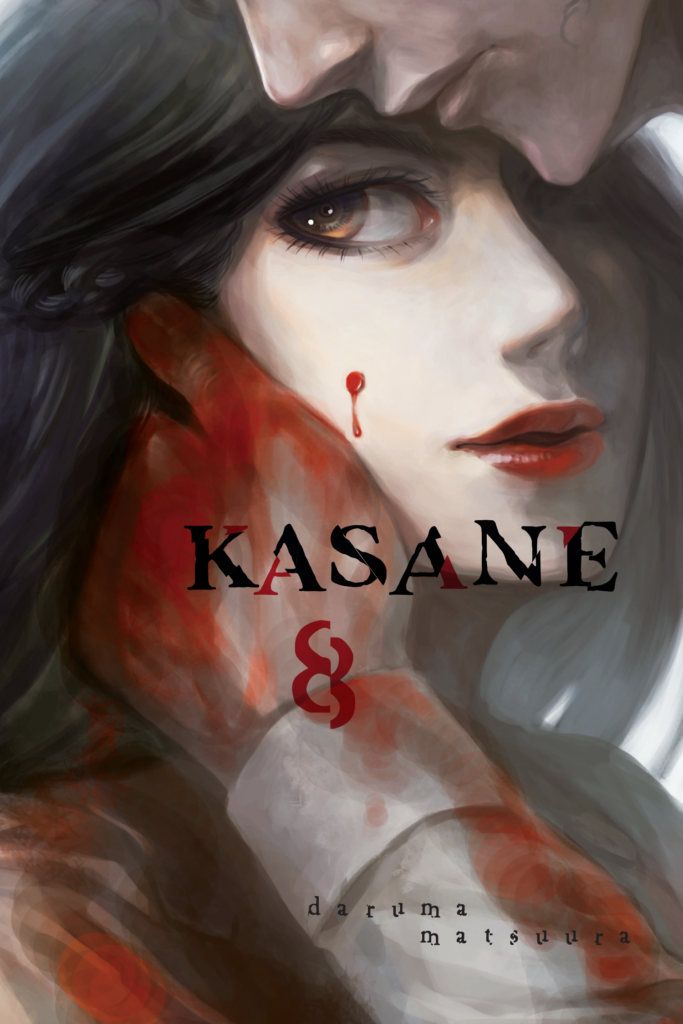
304 – Kasane part 1

304 – Kasane part 1

Welcome as we begin our newest Retrospective on Daruma Matsuura’s Kasane! We’re excited to dive into this dark fairy tale of Kasane Fuchi and her magical lipstick that allows her to swap her hideous face with others. Join us as we discuss everything from Kasane’s addiction to beauty to the Japanese ghost story it’s based on!!!

Continue reading

Tsuma ga Otto de Otto ga Tsuma de

Tsuma ga Otto de Otto ga Tsuma de

A manga where a married couple end up with swap bodies and must now live as each other.

What a thoughtful series about married relationships!

While the premise for this manga is extremely common, I was really impressed with how creator Echo Aonami focused on having the couple work through their relationship issues. The husband and wife are both able to “walk a mile” in each others shoes and this leads to open discussions about how they each acted poorly to each other in the past. There’s a lot of literal roleplaying and it’s really comforting to see them come together to support each other and their non-verbal child. There’s also some great comedy with the husband in the wife’s body having to go to the gynecologist. I liked this manga a lot!

~dakazu

Ryuma no Gagou

Ryuma no Gagou

A manga about different warriors who carry on the mantle of ‘Ryoma’ as they battle against monsters in a post-apocalyptic fantasy that spans multiple generations.

I finally went back and finished this series that I started years ago. I remember really being enamored with the premise of having each chapter of this manga focusing on a different protagonist the goes by the name of Ryoma and how each one explained the legend and history behind the name and their never ending struggle against the Hakuhi monsters and calamities known as ‘Jin’.

Eventually the narrative follows certain characters on a longer arc and those arcs would conclude and lead to a generational change to a new protagonist. While I enjoyed this, by the end of the series they started rushing the plot and time skips. Even the artist Hiroki Miyashita makes a joke in the afterword about how readers thought the plot was too convoluted. Also, I thought both the origins of Jin and Ryoma and the final battle use troupe of the hero becoming the villain for the greater good, and I think that’s so overdone. I’m glad I finished it but I wish this manga ended with a bang and not a whimper.

~dakazu

Shogi Sasu Kedamono

Shogi Sasu Kedamono

A manga about Hikari Danzuka, a woman who’s vicious shogi play might makes waves in amateur tournaments. Her strength and ruthlessness catch wind of a reporter who digs up rumors of her sordid past.

Another enjoyable shogi manga. I’ve more than a few manga about female shogi players like Eisei Otome no Tatakai-Kata and Ryu to Ichigo but they always like to focus on the fact that female players are considered inferior to male players. I think a lot of these shogi manga focus on female players to emphasize their talent and skill in a competitive world dominated by men.

The protagonist Hikari also defeats her opponents with overwhelming strength but also completely crushes them without remorse. There’s a big mystery about why she’s so strong and bad rumors about things she did in high school. All of this makes for a really engaging read. Iroha Ichimaru‘s art looked familiar and it was because they also did Million Joe. Ichimaru’s distinct art style works well with these shogi player who are compared to beasts.

~dakazu

Aejuma-sama no Gakkou

Aejuma-sama no Gakkou

A manga about a group of people who have been kidnapped to a remote village where they’re forced to join a school and become classmates with the horrible monster, Lord Aejuma.

This was a decent horror series. I liked the dual antagonists of the very horrific looking Lord Aejuma and the villagers who worship it. While the monster is dangerous and might devour you in an instant, the villagers who lead the classroom pitted the prisoners against each other. I liked how the main character had to try and appease the monster while obeying his human captors. Unfortunately the series ended on Jump+ after only 3 volumes. A shame because I enjoyed this work by Reiji Suzumaru while it lasted.

~dakazu